Natural Terrain Mitigation — Back-analysis of Pinehill Village and Lei Pui Street Landslides
3D numerical back-analysis of two rainstorm-induced landslides using LS-DYNA, quantifying mobility and failure scenarios to inform risk-reduction measures for government stakeholders.
Challenge
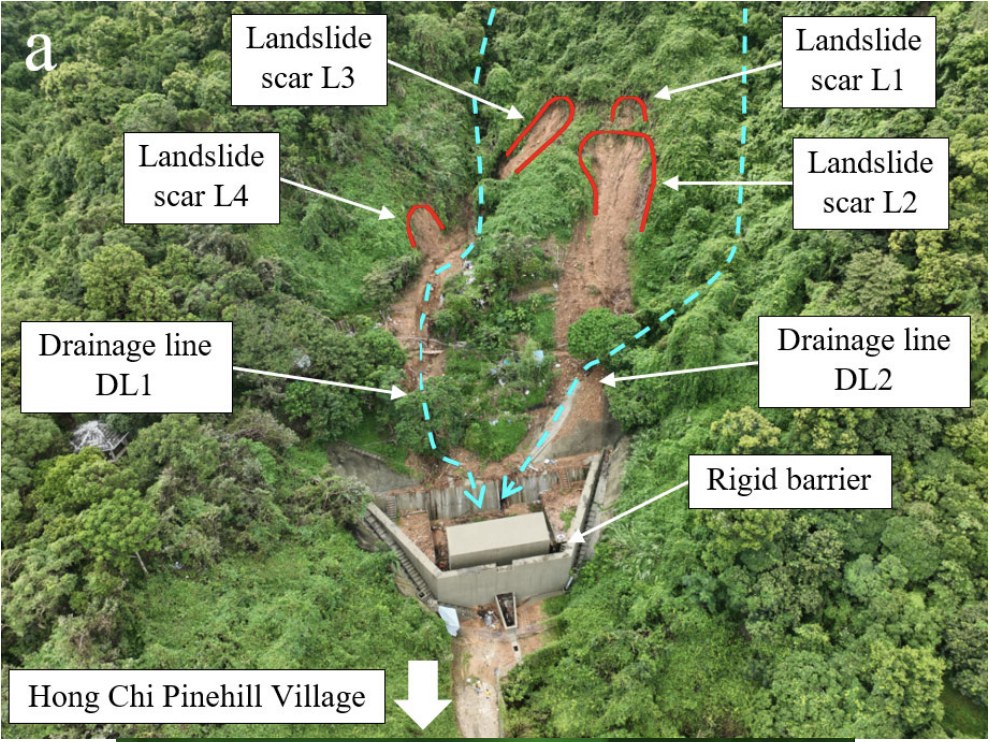
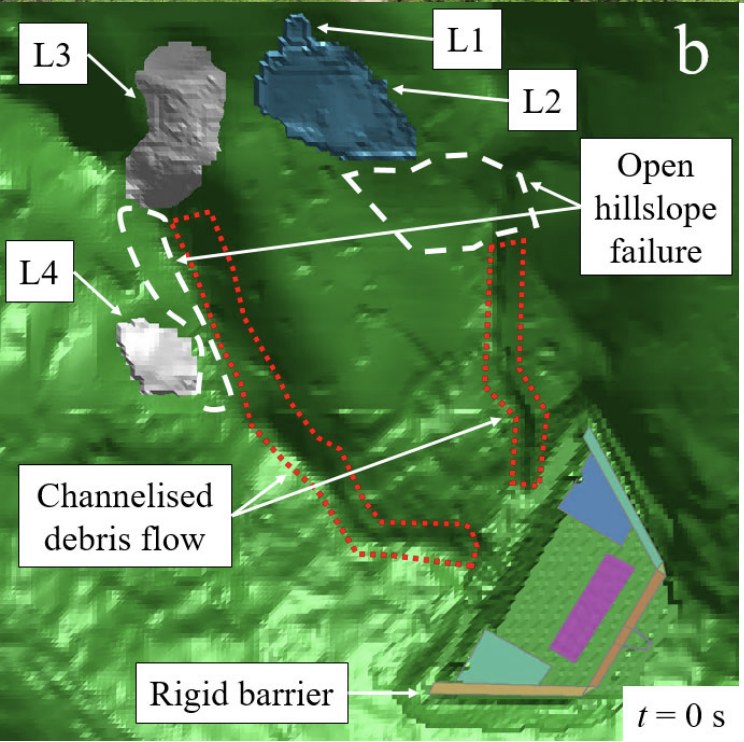
Two rainstorm-induced landslides on natural terrain: how far and how fast would the failed material have travelled and deposited? Working for GEO / CEDD, Bonnie back-analysed the mobility of the Pinehill Village and Lei Pui Street events using the 3D numerical tool LS-DYNA. The work quantified failure scenarios and informed risk-reduction measures for government stakeholders, including an additional run assessing the Pinehill Village event without the rigid debris-resisting barrier in place.
Method & Standards
⛰️ Numerical modelling (LS-DYNA)
The analysis reproduced the runout and mobility of the failed material across complex natural terrain, using an additional barrier-free run to isolate the effect of the reinforced concrete structure on the observed outcome.
🧮 Python tooling & method development
Bonnie wrote Python tooling for efficient processing of topographical data and model set-up, and developed an approach for modelling the transition between open hillside failure (OHF) and channelised debris flow (CDF) — a key behaviour where failure initiates on open slopes before concentrating into drainage lines.
Visual / Demo
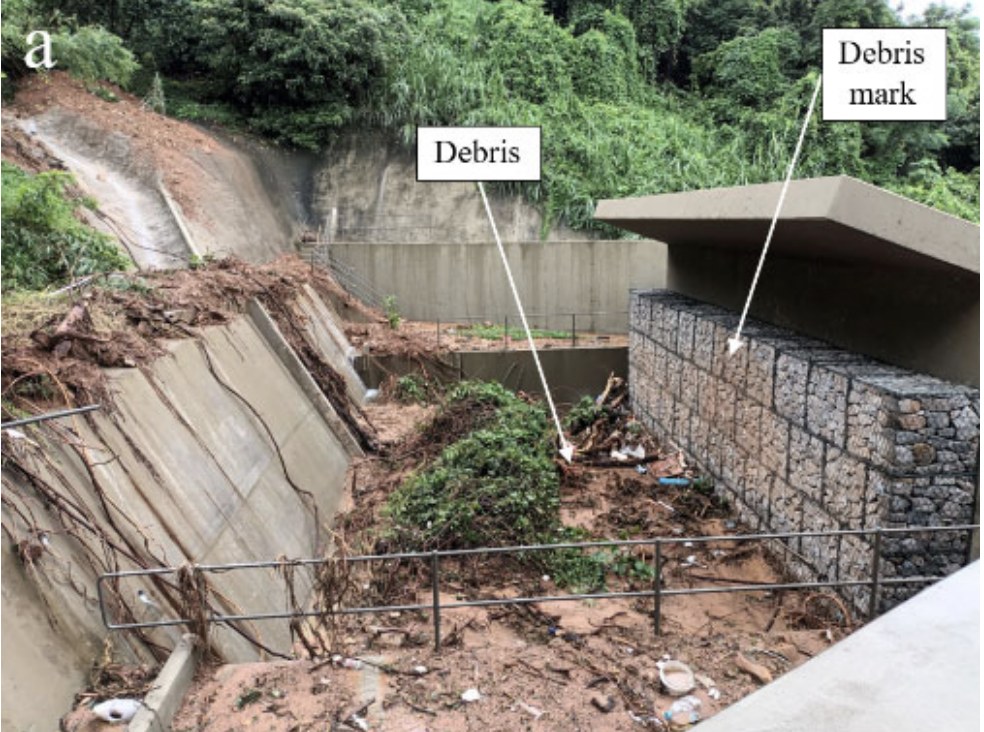
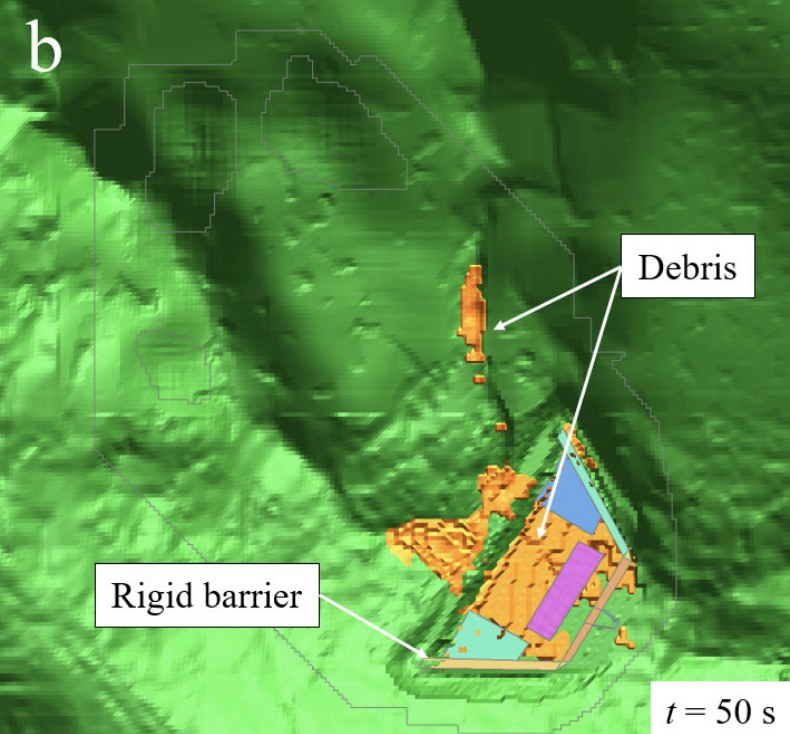
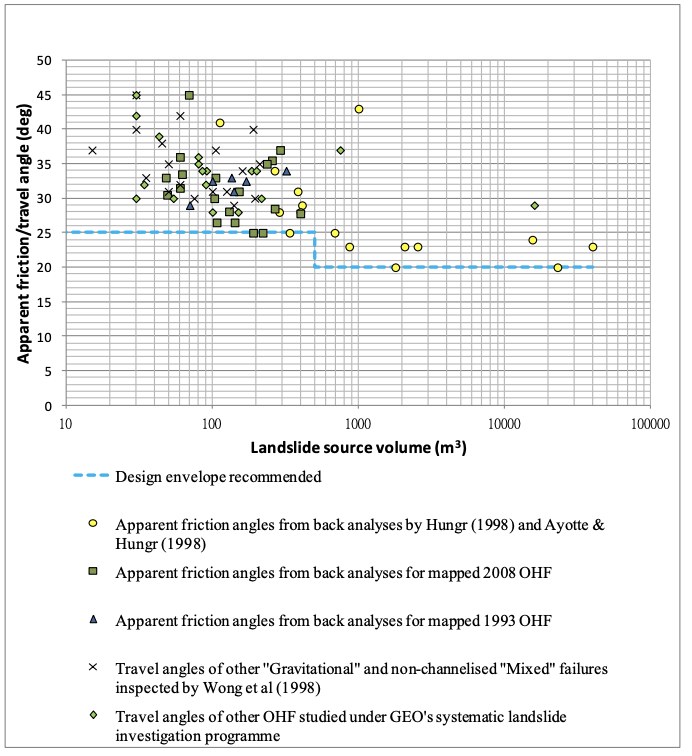
She extracted and post-processed results from d3plot output and produced the analysis figures in Python, turning the simulation output into the visual evidence used in reporting and review.
Impact
By matching the back-analysed runout and deposition against the observed events — including the effect of the debris-resisting barrier — the work gave government stakeholders an evidence base for risk-reduction measures, delivered through a repeatable Python-driven modelling and figure pipeline.